One of the things every leadership course includes is some discussion of personality types. Usually everyone has to take or retake a personality test for the Myers-Briggs system. You usually go around the room at some point and talk about, or show by example, the effects of each piece of the type.
Then, at some point, they recommend building teams with a diversity of personality.
But who actually ends up doing that? Sure, any reasonably good builder of small teams and assigner of tasks considers personality when doing that job. Good managers even consider diversity of personality as one input. Who goes to their list of people and Myers-Briggs types and uses that list?*
I took a refreshing break from my staff job today to keep up my “mission qualification”, and it really re-centered me. Sim time is something only pilots used to talk about, but the new “cyber sim” concept has brought that idea into the info ops world. Stupid name, great concept.
I took my laptop out to the local library and sat in a back room one of the squadrons borrows regularly. I set out my coffee and turned my noise cancelling headphones on to the Swordfish soundtrack on repeat. I SSHed in to the cyber sim virtual machine and got started.
This can certainly be taken too far, as in “stop-and-frisk” policies, if those are examples of broken windows policing, as some suggest.
When applied to a team you’re leading, broken windows policing looks like: making sure uniforms are still sharp and worn properly, office common spaces are kept tidy, individuals are shown respect in each interaction, promises are kept, report and presentation standards are being met, and people generally meet the requirements and standards of each of their duties.
Commanders of operational units maintain their flying qualification. Most units in the Air Force aren’t flying units, but all have some mission they’re responsible for.
Remain Qualified on your Mission System
Once a quarter I should spend a day making sure I’m up to speed on the mission my folks are doing, and if possible I should get some practice actually doing it. At the least I should sit alongside folks as they execute the mission.
A couple tips about getting an Android phone working again when you’re on the road are down below, along with tips about TOTP codes when your phone dies. I set those apart. But first, the background.
Recently, my Google Pixel stopped working for phone calls. That’s a big deal when you’re trying to move across the country. Not to mention the fact that failing to work for phone calls is an existential crisis for a cell phone.
When the feeling in my organization is just a little… off; when someone reacts to my words in a way that I didn’t expect; when someone doesn’t come through with that task they said they’d finish; when my organization isn’t cutting it by some metric; when I let someone down; when I get any negative feedback; when I need to give any negative feedback.
Be deliberate.
Do some research about how other folks have handled the situation. If this is a large issue, there may be a relevant book. Find multiple points of view if possible. Read about how well others’ attempts at similar issues have succeeded or failed.
2120: pre-ferment done, by weight, except 2 Tbsp starter (40g).
For the jerky marinade, I followed the original foodie recipe but skipped the brown sugar (we were out), and subbed coconut aminos for soy sauce, left out liquid smoke, used regular paprika, and added slightly more cayenne then called for. I sliced the 2.5 lbs of top round with the grain mostly.
9:50: meat is in marinade.
0815, next day: I added the remainder of an old packet of regular yeast to the sourdough, about 5g. Then the rest of the ingredients.
I eat lots of bread. I eat lots of smoked meat, too, but unfortunately we need to eat all the stuff in the freezer now. It’s no time to make more smoked meat. But sourdough? That’ll be eaten in a week.
This time I used 1.5 Tbsp starter instead of 1, hoping to get more rise in the dough for the same about of sit time.
0930: finished kneading. Last night I did the pre-ferment, and earlier this morning I mixed in the rest of the ingredients.
How do we assess an individual’s fluency with computers? We’re gonna go a little deeper than ability to use Microsoft Word…
There’s a point, in knowledge and skill in the field of computer science, when programming languages mostly start to look and feel similar. “Learning a new language” is more like learning the peculiarities of a dialect of some language you already speak, than switching from English to Russian. When laypeople ask if you know a certain programming language, one which you do not already know, it occurs to you that answering in the negative would not be entirely correct. You can probably code passably in that language with only an afternoon on Stack Overflow.
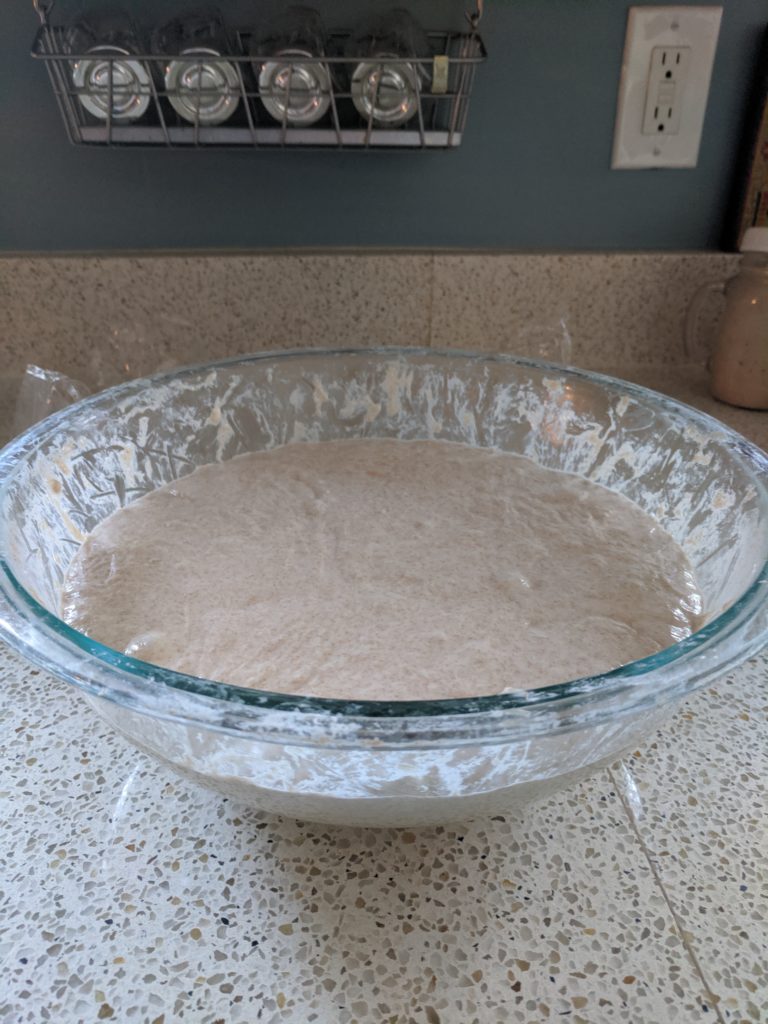 Bulk Rise Done
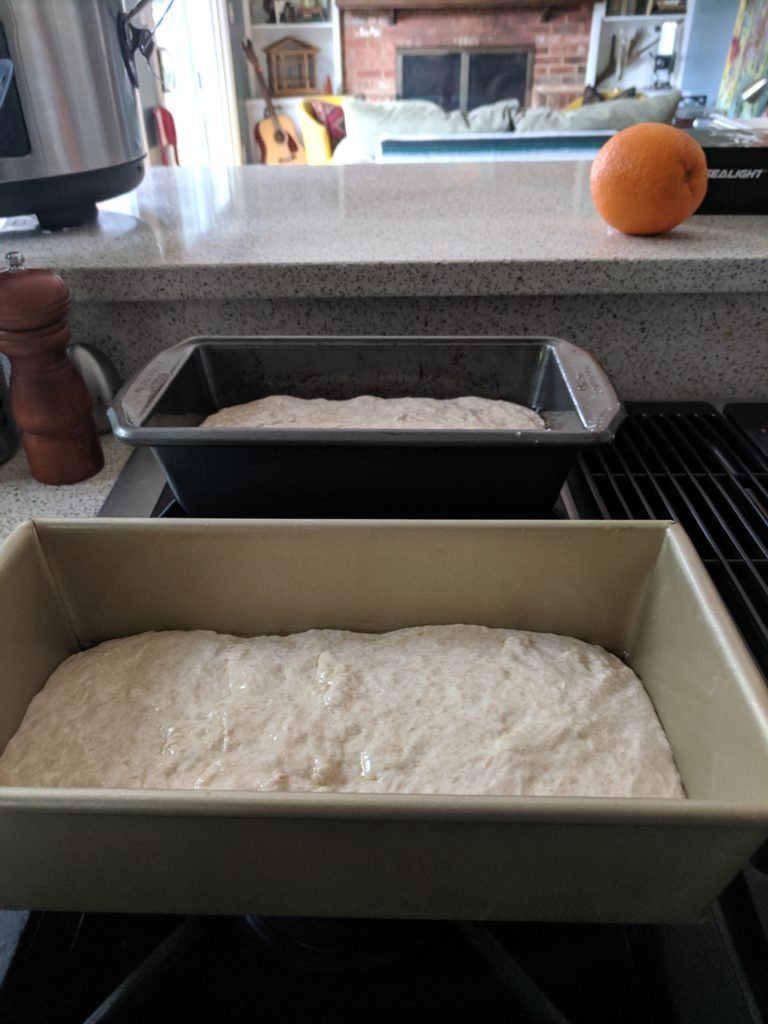 Starting to Rise in the Pans